
4 parties were not enough
Let’s do a recap about the main parties in Spain: from left to right, we had Podemos (extreme left), PSOE (center-left), Ciudadanos (center) and PP (center-right). This was the starting position of the Spanish political spectrum, but we will see in this post how, along 2019, the different parties are going to slightly move depending on their strategy.
Ciudadanos popularity grew a lo thanks to their paper on Catalonia: in the Catalonian election, Ciudadanos was the first power and the only party that was able to beat the independentist parties (even though the independentist summed their seats to govern). That made that many people in the rest of Spain saw the orange party as the solution for this problem. Taking advantage of this, Albert Rivera and his party decided that their strategy would be to move to the center-right and try to beat PP, who was in a very weak moment after the motion of censure, and be the alternative to PSOE.
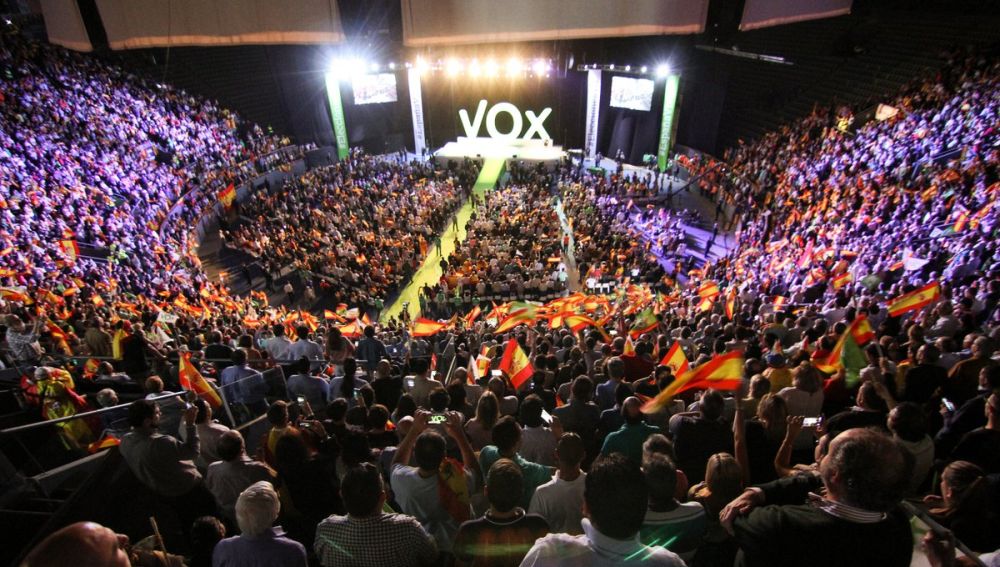
But Ciudadanos was not the only party to benefit from the Catalonian situation and PP’s weakness: VOX, as extremist and populist as Podemos but on the opposite side of the spectrum, won an incredible popularity among the Spanish voters and got into the fight for going to Moncloa. VOX was not a new party but, until then, their representation in the elections were complete negligible. The party lead by Santiago Abascal was born to satisfy the need of many right-oriented people to fight the independentists, the feminist movement, the immigrants and the gay-pride movement, among others.
With the move of these two parties, PP had to decide either to stay at center-right and compete with Ciudadanos or move to the right and try not to lose those votes that would probably go to VOX.
April 2019 election and the correspondent investiture
The die was cast, the right parties were going to fight against each other to see who the best opposition to PSOE was and, then, try to form a govern together. Podemos was in a weak position and its strategy was to tell the left voters that, if Podemos is weak, PSOE would try to govern with Ciudadanos, so the only option for a real left-oriented government was voting Podemos.
The election took place and the result was the following: 123 seats for PSOE, 66 for PP (worst result in its history), 57 for Ciudadanos, 42 for Podemos and 24 for VOX. Once again, none block summed enough seats to easily present a winning investiture. Ciudadanos had an incredible growth but not enough to become the first power in the opposition and VOX’s growth was smaller than expected.
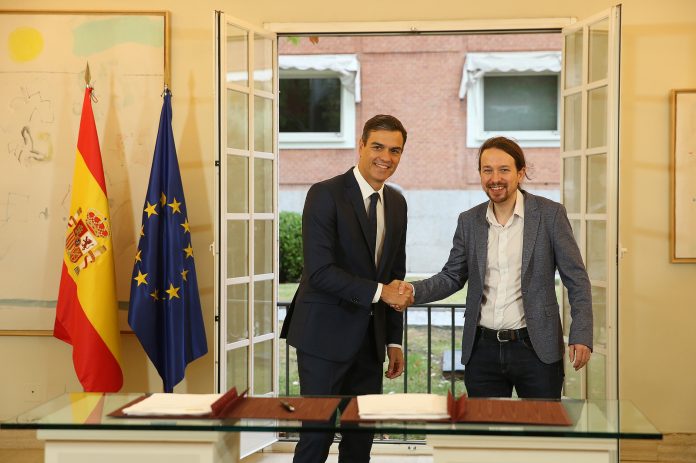
The only possible outcome of this result could be that PSOE and Podemos tried to govern together (with the supports that they got in the motion of censure), so their leaders started a long period of negotiations. After five months, Pedro Sánchez and Pablo Iglesias didn’t reach an agreement: Sánchez said that Iglesias asked for too much power within the government and Iglesias said that Sánchez just didn’t want to agree with Podemos. Honestly, I don’t know who the liar was, but one thing was clear: new elections would take place in November.
November 2019 election brought some surprises
When the new elections were announced, a joke about it went viral. The joke said that 15 years ago, Spanish people used to go on vacation every year and vote every four years; now, Spanish people vote every year and go on vacation every four years.
I have always thought that repeating elections was stupid: people don’t change their opinion in just a few months and the results are always very similar. Well, I guess not this time. PP realized that the strategy to fight against VOX was a complete mistake, since people that wanted to vote to the right edge of the scope would choose VOX instead of a lighter party. So, for the following election, PP was going back to the center-right.
That left Ciudadanos in a very weak position, since it went from having the center-right free to competing with PP, who was clearly stronger. At the same time, the right side was free for VOX, who also was in a very good situation, since the independentist people in Catalonia had turned more radical.
The result was a catastrophic result for Ciudadanos and a tremendous growth for VOX: 120 seats for PSOE, 89 for PP, 52 for VOX, 35 for Podemos and 10 for Ciudadanos. The situation looked even worse than in April for forming a government and, when everybody though that Spain was going towards the third election, PSOE and Podemos signed an agreement to present an investiture together.
It looks like that the Spanish political block is seeing the light at the end of the tunnel, but for the investiture to be approved, PSOE and Podemos will need the support of many other parties (remember the Frankenstein government) and they will have very low power to govern the country. But, at least, it looks like Spain will have a government soon. We don’t know how long it will last, we don’t even know if it will finally occur, but one thing is clear: seeing the quality of the Spanish politics, maybe the best solution was not to have a government.
Thank you for reading my blog and, if you’re interested in how this novel will finish, pay attention to the Spanish news.
P.S.: don’t think that everything in Spain is as horrible as its politics, we are a beautiful country so don’t doubt to visit it. It is just that Spain is different.

Nice blog! I think you didn’t have to explain so back in time but for the rest it was really…
Me encanta la idea de hacer un blog sobre la situación política actual española, es muy interesante. No hay excusa,…
I liked the blog, very useful and well done.
Amazing photos!! Thanks, it’s very interesting!!!
 Spanish politics for non Spaniards
Nice blog! I think you didn’t have to explain so back in time but for the rest it was really interesting!
LikeLike